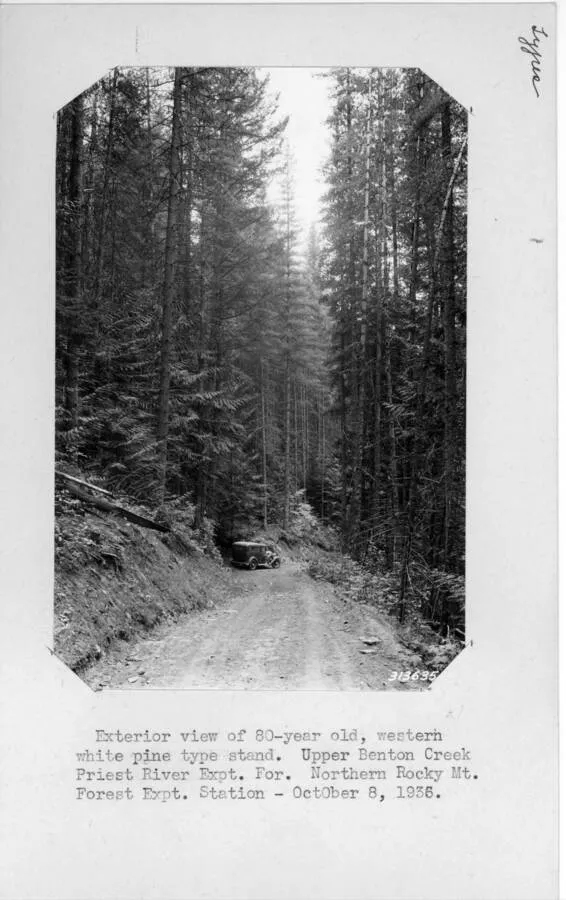
Did you know that some of North Idaho's mightiest trees left Sandpoint not as boards or beams, but as tiny blocks cut to exactly the height of a matchstick? The western white pine forests around Lake Pend Oreille drew matchmakers from Michigan, because the grain of old-growth white pine was so straight that it could be split into the tiniest shards with virtually no waste. For the Sommers brothers of Saginaw, Michigan, that straight grain was worth a factory on Sand Creek.
Charles, Sylvester, and Frank Sommers had each begun working at match companies as boys, and Frank started at the age of nine. In 1903 the brothers bought a deserted factory in Saginaw, and in 1904 Frank invented the double dip match, which stole the market. By 1909 they had expanded into a five-story factory, taken the business public, and rebranded it as the Sommers Bros. Match Co. At its peak, their Saginaw factory was producing more than 86 million matches per day, and the brothers acquired timberland near Sandpoint said to be enough for the next 50 years.
In Sandpoint, the brothers set up a lumber mill west of town and acquired 40 acres north of the Humbird yards on Sand Creek. In 1909 that property became their match block factory, supervised by John H. Bolin. Logs were cut and milled in Sandpoint and shipped to Saginaw to be dipped and packaged, but Frank found a clever way to save on shipping. Because only 60 percent of raw white pine turned into salable matchsticks, the crews pre-cut the logs into small blocks the height of a matchstick and packed those blocks tightly onto trains. The idea removed wasted space and weight, and the factory became one of the largest employers in Sandpoint. Blocks with knots or other imperfections were weeded out and sold to the Sandpoint Ice and Fuel Co., which resold them to local families as stove wood, an immensely popular product.
The factory mattered enough that Sandpoint worked to keep it. In September 1917, Bolin asked the city to dam Sand Creek so the factory could expand with a year-round millpond, after the company acquired the Sand Creek frontage that had previously housed the LaFond brickyard. Bolin warned that the factory was being enticed to move elsewhere, and town leaders knew losing it would have cost the community dearly in jobs and contracts. For a few more years, the little block factory held its own against the larger Diamond Match Company, which operated a huge mill in Priest River.
On March 29, 1921, disaster struck when the match block factory burned to the ground. The employees had gone home in the mid-afternoon and the factory kept no night watchman, so a watchman at the Humbird mill set off the alarm at around 9 p.m. Great efforts were made to keep the fire from reaching the Humbird lumber yards while a crowd of more than 1,000 people watched, and the factory was surrendered as an insurance claim. By August the Sommers brothers had accepted an acquisition offer from Diamond Match, but Bolin patented an automatic block cutting machine that summer, rebuilt the factory, and reopened it that September between Lake and Superior streets on the western edge of Sandpoint. The reformed Sommers Bros. Co. later purchased that factory and operated it briefly, and the building burned down in 1928, four years after it had been abandoned. The next time you strike a match, remember that for a brief moment, North Idaho white pine lit kitchens and campfires across America.