In September 1809 — more than two centuries before the first chairlift — the first European trading post in Idaho rose on the Hope Peninsula. Finan McDonald, working for explorer and fur trader David Thompson of the North West Company, built Kullyspell House on the northeast shore of Lake Pend Oreille, near the mouth of the Clark Fork.
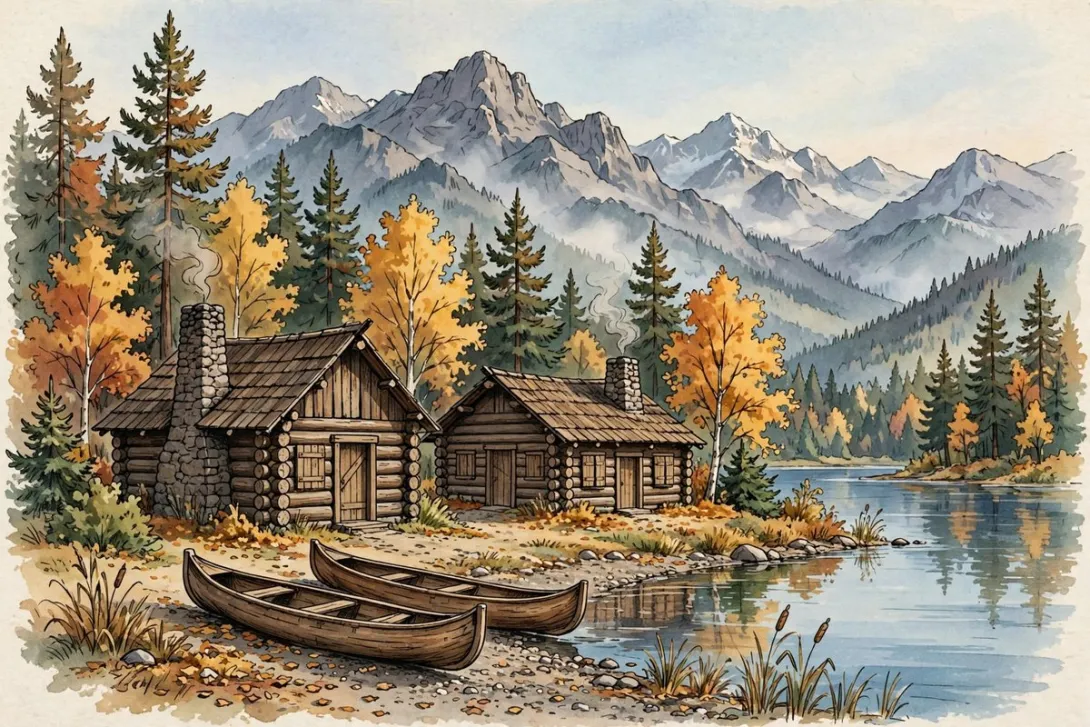
Thompson's journals describe the work: on September 11 they prepared tools and raised a scaffold for the provisions and goods; on September 23 they finished the storehouse. First came a strong log building for the goods and furs, then a dwelling house, built of split logs with stone-and-mud chimneys. It was the earliest fur-trade post in the part of the Pacific Northwest that would become part of the United States in 1846.
Kullyspell lasted only two years. Thompson soon built Saleesh House and Spokane House, and Kullyspell — off the main line of travel — was abandoned in 1811. Its stone chimneys reportedly stood for 87 years before a windstorm toppled them.
Thompson's legacy is written on the map. "Kullyspel" was his spelling of the name the local people called themselves — the Pend d'Oreilles — and it survives in Kalispell, Montana. And in his 1809 journal, Thompson noted a "point of sand" on the lake — the sandy shore that gave Sandpoint its name. Members of the Kalispel tribe called it Qapquape, meaning "sandy place."
No trace of the post remains today, but the story lingers wherever you look across the lake from the mountain — the same waters Thompson paddled in a Kalispel canoe.
Thompson kept recording the landscape. In June 1811, canoeing the lake again, he set his course by "the Rock below the Sandy Point" — a granitic feature scoured by ice-age floods, now known as Tank Hill. Two centuries later, you can stand near Sandpoint's City Beach and read the same shoreline Thompson wrote about.